
OCTOPATH TRAVELER: CotC
Exptional GlobalRole Playing
4.5557.00 Reviews
- Version
- 4.2.5
- Installs
- 500.00K
- Age Rating
- Teen
Screenshots
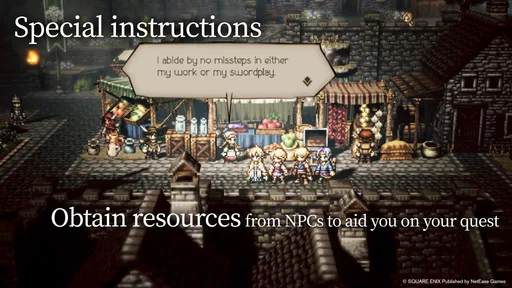
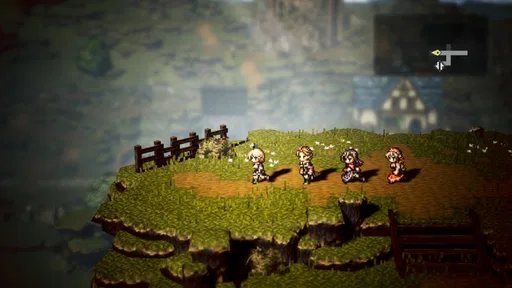
Our Review of OCTOPATH TRAVELER: CotC
 Analysis by Appyee
OCTOPATH TRAVELER: CotC is the kind of role-playing game I can recommend when I want a slower, more thoughtful mobile adventure rather than a quick burst of action. Its appeal comes from the combination of a story-led journey, turn-based battles, and the distinctive visual style associated with the OCTOPATH TRAVELER series. After spending time with it, my main conclusion is simple: this is a strong choice for players who enjoy planning teams and following character-driven adventures, but it is less suitable if you want a completely free-form game with no mobile-game friction.
Developed by Exptional Global, the game is free to start and aimed at a Teen audience. It runs on Android devices using version 6.0 or later, which makes it accessible on a wide range of phones and tablets. The current version is 4.2.5, and the store page shows a 4.5 average from around 21,000 ratings. Those figures suggest that the game has found a dependable audience, but they do not replace the more important question: whether its deliberate pace and character-building systems fit the way you like to play.
Why the journey works better than a typical mobile RPG
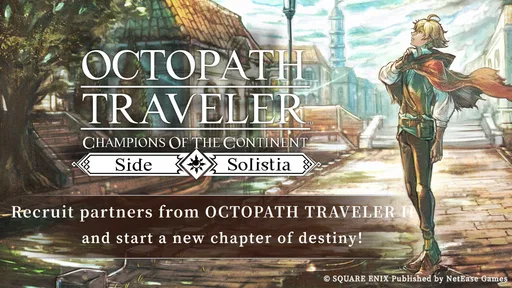
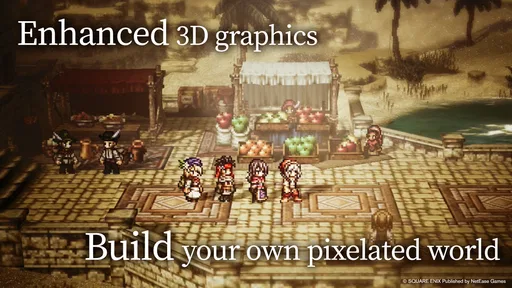
The first thing that stood out to me was the atmosphere. CotC does not try to look like a generic three-dimensional mobile RPG. Its presentation uses detailed pixel-art characters against more layered environments, creating a look that feels both nostalgic and carefully composed. Battles, towns, roads, and story scenes have a theatrical quality, so even routine travel can feel like part of a larger stage production.
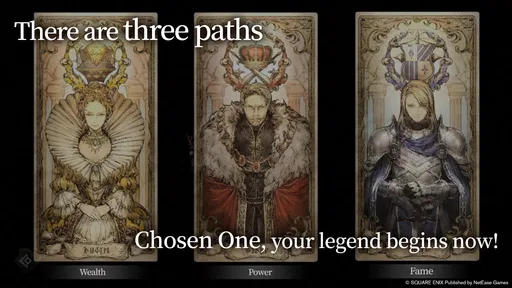
That visual identity matters because the game is built around reading, listening, and making decisions rather than simply rushing from one fight to the next. The story is divided into substantial narrative arcs, and the different paths give the world a broader emotional range. Some moments feel grand and political, while others are more personal and focused on the consequences of individual choices. I found that variety more satisfying than a single storyline that keeps repeating the same heroic formula.
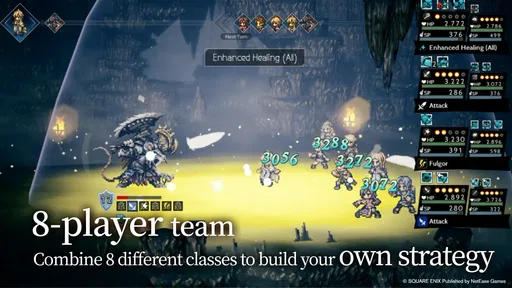
The turn-based combat is the strongest practical reason to keep playing. Instead of relying only on raw damage, I have to pay attention to enemy weaknesses, manage the order of actions, and decide when to spend stronger attacks. Breaking an opponent at the right moment can change an otherwise difficult encounter, so battles reward observation more than frantic tapping.
A useful habit is to treat every new enemy as a small puzzle. I do not immediately spend the most powerful ability available. I first test which attack types affect its defenses, then adjust my formation and conserve resources for the moment when a break is likely. This approach makes ordinary encounters feel purposeful and helps prevent the common mobile-RPG problem where combat becomes nothing more than pressing the same button repeatedly.
The party system also gives the battles more texture. A well-rounded group is not simply the one with the highest individual statistics. I need characters who cover different weaknesses, provide support, and remain useful when the enemy changes its defenses. This creates a trade-off that I appreciate: a newly acquired character may be valuable because of a particular role, even if that character is not immediately the strongest member of the roster.
That is one of the game’s less obvious strengths. I recommend building teams around coverage instead of chasing a single favorite character’s damage output. When preparing for a difficult area, I look at the enemies I expect to face and choose a party that can answer several attack types. This makes progression feel more strategic and reduces the frustration of discovering that a powerful team cannot exploit the weaknesses in front of it.
The game’s current store summary highlights an OCTOPATH DAY event, which gives returning players and series fans a reason to check in. Events can add useful variety to a long-running role-playing game, particularly when the main story has begun to settle into a routine. I would still approach event content as an extra layer rather than the sole reason to install the game, because the core experience is strongest when enjoyed as a continuing journey.
A good fit for short sessions, with a catch
I found CotC easy to fit around a normal day. A short session can be used to clear a few battles, improve equipment, review the party, or continue a story scene. That makes it suitable for a commute, a lunch break, or an evening when I do not have the energy to start a large console RPG. At the same time, the story often asks for enough attention that I would not recommend playing every scene while distracted.
A realistic example is a weekday evening when I have only twenty minutes. I can open the game, check which characters need development, complete a small stretch of exploration, and stop without feeling that I have abandoned a complicated real-time match. On a quieter weekend, I can give the narrative more attention and work through a longer sequence. That flexibility is one of its best mobile qualities.
The catch is that progress can feel less satisfying when I approach it as a purely casual game. The deeper systems reward regular attention, and a neglected party can become uncomfortable to use when the story difficulty rises. I would not call that a flaw by itself, but it means the game suits players who enjoy maintaining a roster rather than those who want to play once every few weeks with no preparation.
Where the free-to-play structure becomes noticeable
The game is free to download, but it includes in-app purchases ranging from $0.29 to $83.00 per item. That range is important for anyone deciding whether the game belongs on their phone. I could enjoy the narrative and combat without treating every purchase as necessary, yet the presence of paid options can still influence how I think about character collection and progression.
My advice is to decide on a personal spending limit before getting invested in the roster. The most dangerous moment is not when the game first asks for money; it is when a favorite character, limited opportunity, or difficult battle makes an extra purchase feel emotionally justified. Setting a boundary early keeps the strategic part of the game from turning into a spending decision.
This is also where CotC differs from a traditional single-player RPG. In a premium console game, I generally expect the available party and progression path to be defined by the purchase. Here, the free entry makes the game easier to try, but the broader collection structure can introduce uncertainty about how quickly I will obtain the characters I want. Players who dislike randomized or purchase-linked character acquisition may find that tension more distracting than enjoyable.
Another limitation is the amount of management involved. The game asks me to think about party composition, upgrades, equipment, and the usefulness of individual characters across different situations. That depth is welcome when I am in the mood for it, but it can become administrative work after a long day. If your ideal mobile RPG is something you can play almost entirely on autopilot, this is probably not the right choice.
I also would not choose it for fast competitive excitement. Its strengths are narrative pacing, careful battles, and personal progression, not rapid multiplayer pressure or reflex-based action. Someone who prefers an arena game, a short arcade session, or a visually explosive real-time adventure will likely find the turn-based structure too restrained.
Practical habits that make the game more enjoyable
The first habit I recommend is to avoid leveling every character equally. A broad roster is useful, but spreading resources too thinly can leave the main party underprepared. I prefer to maintain a dependable core group while developing additional characters when their abilities answer a specific weakness or story requirement.
The second is to read enemy behavior rather than treating battles as damage races. When a fight becomes difficult, I first ask whether my party lacks the right attack coverage or whether I am using powerful skills at the wrong point in the turn order. Often, a small adjustment is more effective than blindly grinding.
The third is to separate story goals from collection goals. If I make obtaining every desirable character the main purpose of playing, the game’s narrative becomes secondary and the purchase structure becomes more noticeable. When I focus first on the journey and treat new characters as tools that expand my options, the experience feels much healthier.
A fourth useful approach is to keep a simple mental note of which party members are reliable against particular enemy defenses. I do not need an elaborate spreadsheet, but remembering a few dependable answers saves time when returning to a difficult area. It also gives the roster a practical identity: characters become part of a strategy rather than names I keep only because they are rare.
Finally, I recommend playing important story sections when you can concentrate. The pixel-art presentation is attractive on its own, but the narrative has more impact when I am not skipping through dialogue while multitasking. This is a game that benefits from treating its story as the main course instead of background decoration between battles.
Who should install it, and who should skip it?
I think CotC is best for fans of classic Japanese role-playing games, especially those who value turn-based decision-making and a strong visual identity. It is also a good option for someone who wants a substantial mobile adventure that can be played in short sessions without abandoning a larger story. Players familiar with the OCTOPATH TRAVELER style will probably appreciate the atmosphere immediately, while newcomers can still enjoy the game if they are comfortable with a slower introduction.
It is particularly appealing to people who like experimenting with party roles. If you enjoy asking which character belongs in a specific team, how to exploit an enemy’s weakness, or when to save a powerful ability, the combat offers enough detail to stay interesting. The game rewards preparation without demanding that every encounter become a complicated calculation.
I would be more cautious recommending it to players who want a fully self-contained premium experience. The free entry is convenient, but the in-app purchase range and collection-focused structure may not feel as clean as buying one complete RPG and receiving its entire progression path. Someone who dislikes recurring events, roster management, or the possibility of spending pressure should look for a more traditional alternative.
I would also skip it if your priority is action. CotC is not trying to replace a real-time combat game. Its pleasure comes from choosing the right move, watching a plan work, and gradually shaping a capable party. If that sounds slow rather than satisfying, the game may become a chore before its strongest story moments arrive.
Compared with a typical mobile role-playing alternative, CotC gives more weight to atmosphere and deliberate combat than to constant spectacle. Compared with a classic offline RPG, it offers easier short-session play but less certainty around the long-term collection experience. That middle position is both its identity and its main compromise.
My final recommendation
After reviewing the game as a whole, I see OCTOPATH TRAVELER: CotC as a thoughtful mobile RPG with a clear personality. Its pixel-art presentation, layered storytelling, and weakness-focused battles make it more memorable than a disposable daily game. I especially like that success often comes from understanding the encounter and arranging the party well, not simply from tapping through a battle with the highest numbers.
The weaknesses are equally clear. The amount of roster management can feel heavy, the free-to-play structure will not suit everyone, and the pace is too measured for players looking for immediate action. The Teen rating also makes it better suited to older players who are comfortable with its dramatic themes and collection mechanics.
With over 500,000 installs, it has already built a sizable mobile audience, and I can understand why. The game is free to try, supports devices running Android 6.0 or later, and offers enough story and tactical depth to justify a serious look. My recommendation is to install it if you want a character-driven, turn-based adventure and are willing to set sensible boundaries around purchases. If you want a one-time purchase with no collection pressure, or a game built around fast real-time combat, choose something else. For everyone in between, this is a polished and unusually atmospheric way to bring a classic-style RPG journey to a phone.
Verdict
Strengths of OCTOPATH TRAVELER: CotC
- Faithful HD-2D visuals capture the charm of the original game.
- Large cast of characters offers varied skills and party combinations.
- Turn-based battles reward exploiting enemy weaknesses and planning ahead.
- Frequent story chapters provide substantial content for a free mobile RPG.
- Excellent orchestral soundtrack strengthens the classic RPG atmosphere.
Limitations of OCTOPATH TRAVELER: CotC
- Gacha recruitment can make obtaining specific characters frustrating.
- Energy and upgrade resources may slow progress during longer sessions.
- Some story scenes rely heavily on reading instead of interactive gameplay.
- Auto-battle reduces engagement during repetitive fights and farming.
- Requires considerable storage space and a stable internet connection.
Other Releases by Exptional Global
View All
Once Human
Adventure4.6

Where Winds Meet
Action4.2

Star Hunter-Infinite Lagrange
Strategy3.7

Destiny: Rising
Action4.2
Similar Picks in This Category
View All
Hair Dye
CrazyLabs LTD4.4

Monster High™ Beauty Salon
CrazyLabs LTD4.5

Bus Simulator - Bus Games 3D
Jima Apps4.4

Flight Pilot: 3D Simulator
Wildlife Studios4.1


Super Stylist Fashion Makeover
CrazyLabs LTD4.4
Frequently Asked Questions
What is OCTOPATH TRAVELER: CotC?
OCTOPATH TRAVELER: Champions of the Continent, commonly called CotC, is a single-player mobile RPG set in the world of Orsterra. It serves as a prequel to the original OCTOPATH TRAVELER and features turn-based battles, pixel-art characters, voice acting, exploration, and a large story campaign. The game focuses on building a party of travelers and confronting powerful enemies through different narrative paths.
Is OCTOPATH TRAVELER: CotC free to play?
Yes, OCTOPATH TRAVELER: CotC can be downloaded and played for free, but it includes optional in-app purchases. These purchases may provide rubies, character summons, upgrade materials, or limited-time bundles. Progress is possible without spending money, although collecting specific high-rarity characters and keeping up with some event content can require patience. Players should also review the available purchase and spending controls before starting.
Does the game require an internet connection?
An active internet connection is generally required to play OCTOPATH TRAVELER: CotC because the game connects to online services, synchronizes progress, delivers events, and manages account data. It is therefore not designed as a fully offline RPG. A stable Wi-Fi or mobile-data connection is recommended, especially when downloading updates or playing through story sections with voice and visual assets.
What is the combat and progression system like?
Combat uses a turn-based system built around weaknesses, shields, boosts, and party management. Each enemy has vulnerabilities such as sword, spear, fire, ice, or other attack types, and striking a weakness reduces its shield count. Breaking an enemy creates an opportunity for increased damage, while Boost Points strengthen attacks or skills. Characters can be leveled, equipped, upgraded, and arranged to suit different encounters.
Is OCTOPATH TRAVELER: CotC suitable for players who have not played the original game?
Yes. New players can enjoy OCTOPATH TRAVELER: CotC without having played the original OCTOPATH TRAVELER. The mobile game introduces its setting, characters, factions, and major conflicts through its own stories. Returning players may appreciate familiar lore, locations, visual design, and themes, but prior knowledge is not required. Because the game contains several story routes and a large cast, it is best suited to players who enjoy slower, narrative-focused RPGs.
Play our best games!


